
Task Teacher Guide

Be sure to read the teacher guide prior to running the task. When you’re ready to run the task, use the tabs at the top of the page to navigate through the lesson.
[accordion openall=”false” clicktoclose=”true” state=”closed” autoclose=”false” openfirst=”true” clicktoclose=”true”]
[accordion-item title=”Through This Assessment Opportunity…”]

Students will demonstrate the concepts and skills that they have developed through this context and learning experience.

[/accordion-item]

[accordion-item title=”Intentionality…”]

The purpose of this assessment is for students to demonstrate their understanding of the following big ideas.

  • There are two types of division;
  • Partitive division is when the total quota is known (the dividend), and the number of parts or groups (the divisor) is known;
  • Partitive division reveals a rate;
  • In partitive division, the dividend and the divisor often have different units;
  • In a quotative context, the dividend and the divisor have the same unit;
  • Quotative division is when the total quota is known (the dividend), and the number per group or the rate (the divisor) is known;
  • Quotative division reveals the number of copies or iterations of a rate that can be derived from the overall quota (the dividend);
  • The dividend from any division sentence can be decomposed into smaller parts to allow for friendlier division by the divisor. This strategy is known as partial quotients. (i.e.: 85 ÷ 5 = 45 ÷ 5 + 40 ÷ 5 = 9 + 8 = 17).
  • Division is the inverse operation of multiplication;
  • Variables are used to represent changing or unknown quantities;
  • When solving an equation where the coefficient of the unknown variable is not equal to 1, division is required to determine the value of the unknown variable and the context of the problem determines which type of division is required.

The independent assessment will allow students to demonstrate concepts and skills related to the following learning goals:

  • I will demonstrate an understanding of both partitive and quotative division.
  • I will demonstrate an understanding of the inverse relationship between multiplication and division.
  • I will demonstrate an understanding of the use of a variable in a one-step algebraic equation.
  • I will model both partitive and quotative division.
  • I will model and solve one-step algebraic equations that involve multiplication.

Students might write and/or model their answers independently. Students can also be interviewed by their teacher.

An alternative assessment opportunity should be offered if this tool will not successfully capture what the student knows, understands or can do.

[/accordion-item]
[/accordion]

Math Talk

[accordion openall=”false” clicktoclose=”true” state=”closed” autoclose=”false” openfirst=”false” clicktoclose=”true”]
[accordion-item title=”Overview of This String of Related Problems”]

In today’s visual math talk, students will use an appropriate model to solve the following one-step algebraic equations eliciting both partitive and quotative division. Encourage students to name the type of division required to solve and to create a context for each equation. Students are encouraged to use a model to solve and/or communicate their thinking.

p(9) = 117

Login/Join to access the entire Teacher Guide, downloadable slide decks and printable handouts for this lesson and all problem based units.

Consider using the visual math talk prompts to help you prepare to facilitate this math talk or to assist you in doing so in a visual fashion. The purpose of this math talk is to reveal that equations using contexts that leverage both types of division can be solved using the same strategy and model.

Facilitator’s Note:

Take note that when the variable appears first, the variable is representing an unknown number of groups which will require quotative division. When the variable appears second, the variable is representing an unknown rate which will require partitive division.

[/accordion-item]
[accordion-item title=”Visual Math Talk Prompt #1″]

Show the following visual math talk prompt and be ready to pause the video once prompted:

In the video, students are presented with the following quotative division context:

p boxes of 9 muffins per box is equal to 117 muffins.
Solve for p to determine the number of boxes.
p(9) = 117

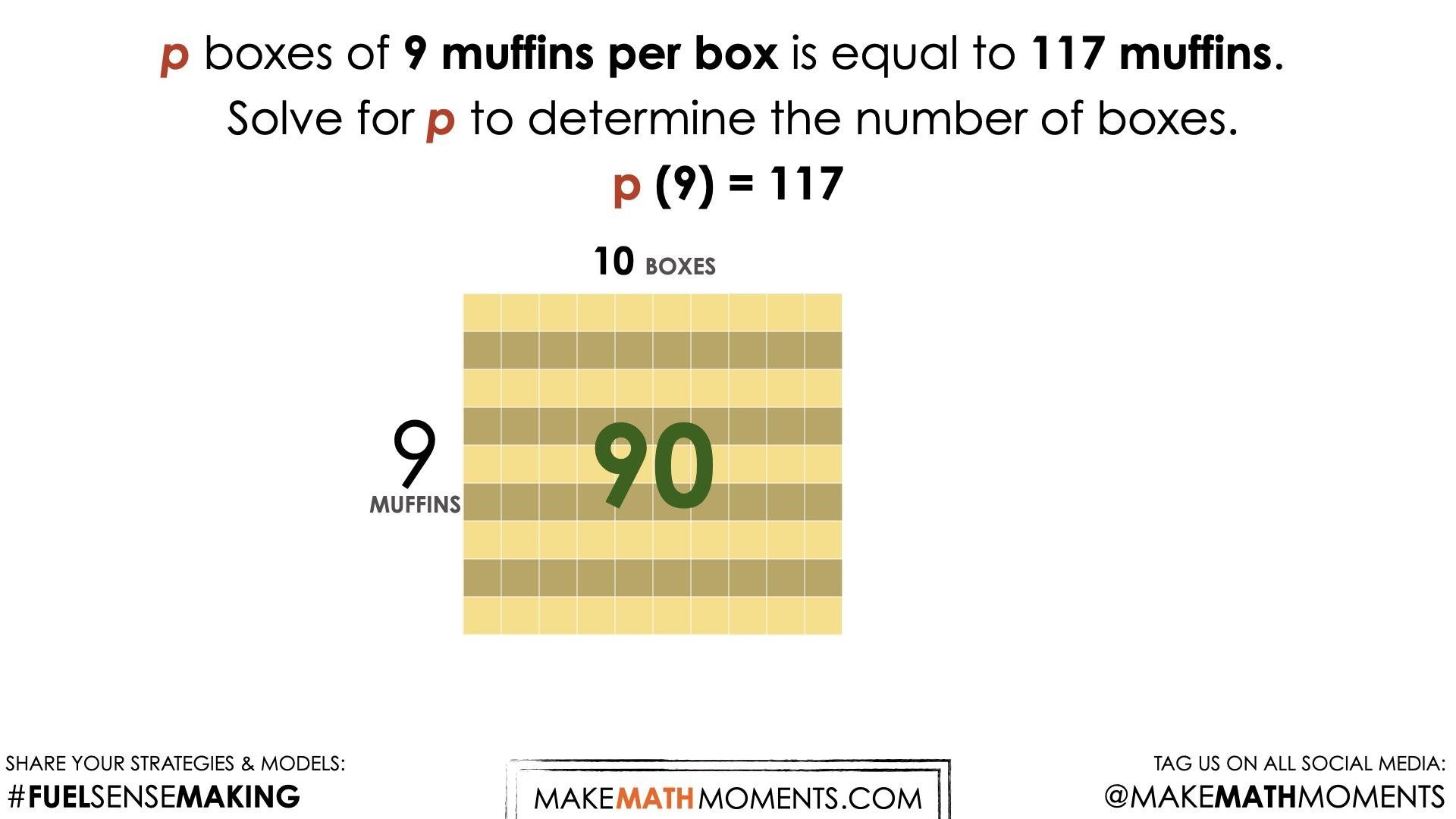
Although students are free to leverage the strategy and mathematical model of their choice, we are hoping to elicit the use of the open array or area model to demonstrate partial products and/or partial quotients.

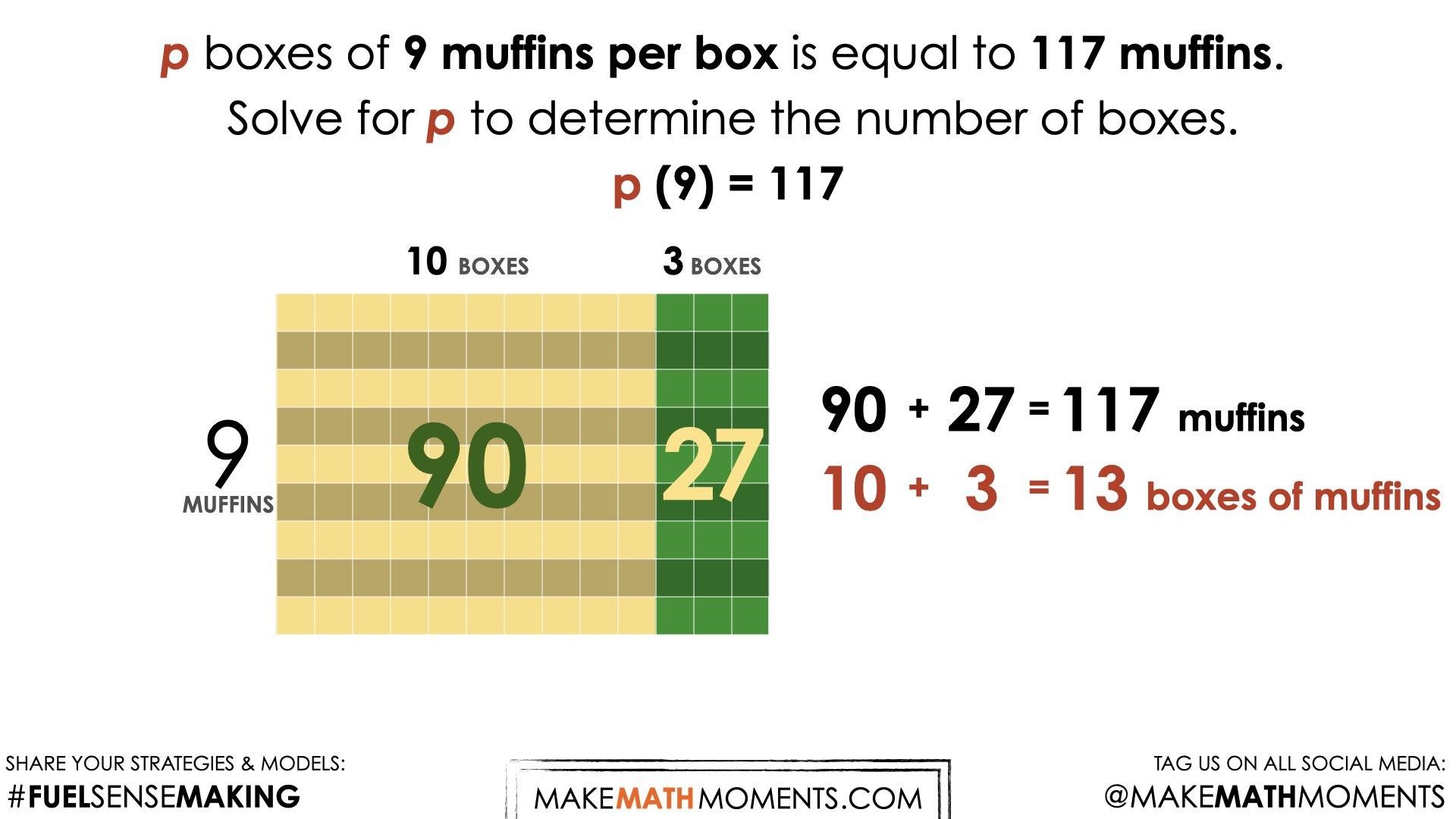
Students may choose to decompose the dividend in any way they would like, but a common practice would be to leverage partial products (i.e.: multiplying 9 muffins per box by 10 boxes) as a means to determine how to decompose and recompose the dividend of 117. In the visual above, you can see that since 10 boxes of 9 muffins per box results in 90 muffins, we now must make up for the remaining 27 muffins (117 – 90 = 27).

Since we must account for the remaining 27 muffins, we will require an additional 3 boxes of muffins.

Therefore, if p(9) = 117, then p = 13 boxes.

[/accordion-item]

[accordion-item title=”Visual Math Talk Prompt #2″]

Login/Join to access the entire Teacher Guide, downloadable slide decks and printable handouts for this lesson and all problem based units.

[/accordion-item]

[accordion-item title=”Visual Math Talk Prompt #3″]

Login/Join to access the entire Teacher Guide, downloadable slide decks and printable handouts for this lesson and all problem based units.

[/accordion-item]

[accordion-item title=”Visual Math Talk Prompt #4″]

Login/Join to access the entire Teacher Guide, downloadable slide decks and printable handouts for this lesson and all problem based units.

[/accordion-item]

[accordion-item title=”Visual Math Talk Prompt #5″]

Login/Join to access the entire Teacher Guide, downloadable slide decks and printable handouts for this lesson and all problem based units.

[/accordion-item]

[accordion-item title=”Visual Math Talk Prompt #6″]

Login/Join to access the entire Teacher Guide, downloadable slide decks and printable handouts for this lesson and all problem based units.

[/accordion-item]

[/accordion]

Assessment

[accordion openall=”false” clicktoclose=”true” state=”closed” autoclose=”false” openfirst=”false” clicktoclose=”true”]
[accordion-item title=”Assessment Considerations…”]

Login/Join to access the entire Teacher Guide, downloadable slide decks and printable handouts for this lesson and all problem based units.

[/accordion-item]

[accordion-item title=”Assessment: Solving One-Step Algebraic Equation”]

Login/Join to access the entire Teacher Guide, downloadable slide decks and printable handouts for this lesson and all problem based units.

[/accordion-item]

[accordion-item title=”Considerations to Promote Student Growth”]

Login/Join to access the entire Teacher Guide, downloadable slide decks and printable handouts for this lesson and all problem based units.

Download Editable/Printable Handout


Become a member to access purposeful practice to display via your projector/TV, download the PDF to upload to your LMS and/or print for students to have a physical copy

JOIN TO DOWNLOAD

[/accordion-item]

[/accordion]

Resources and Downloads

Lesson Tip Sheet
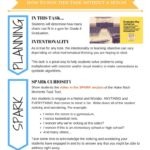
Download the lesson plan in PDF format so you can keep it handy and share with colleagues.

JOIN TO DOWNLOAD

Videos & Images

Hot Chocolate Task Screenshot Images.002Download the videos, images, and related media files to your computer to avoid streaming.

JOIN TO DOWNLOAD

Keynote Slides

Hot Chocolate Task Screenshot Images.003Download in Apple Keynote format to avoid streaming video and run the lesson smoothly.

JOIN TO DOWNLOAD

PowerPoint Slides

Hot Chocolate Task Screenshot Images.004Download in Microsoft PowerPoint format to avoid streaming video and run the lesson smoothly.

JOIN TO DOWNLOAD

Printable Handout

Download/edit the handout so you can keep it handy and share with colleagues.

JOIN TO DOWNLOAD

Explore The Entire Unit of Study

This Make Math Moments Task was designed to spark curiosity for a multi-day unit of study with built in purposeful practice, and extensions to elicit and emerge mathematical models and strategies.

Click the links at the top of this task to head to the other related lessons created for this unit of study.

[accordion openall=”false” clicktoclose=”true” state=”closed” autoclose=”false” openfirst=”true” clicktoclose=”true”]
[accordion-item title=”Visual Math Talk Prompt #1″]

[/accordion-item]

[accordion-item title=”Visual Math Talk Prompt #2″]

Login/Join to access additional Math Talk Prompts as well as the Teacher Guide, downloadable slide decks and printable handouts for this lesson and all problem based units.

[/accordion-item]

[accordion-item title=”Visual Math Talk Prompt #3″]

Login/Join to access additional Math Talk Prompts as well as the Teacher Guide, downloadable slide decks and printable handouts for this lesson and all problem based units.

[/accordion-item]

[accordion-item title=”Visual Math Talk Prompt #4″]

Login/Join to access additional Math Talk Prompts as well as the Teacher Guide, downloadable slide decks and printable handouts for this lesson and all problem based units.

[/accordion-item]

[accordion-item title=”Visual Math Talk Prompt #5″]

Login/Join to access additional Math Talk Prompts as well as the Teacher Guide, downloadable slide decks and printable handouts for this lesson and all problem based units.

[/accordion-item]

[accordion-item title=”Visual Math Talk Prompt #6″]

Login/Join to access additional Math Talk Prompts as well as the Teacher Guide, downloadable slide decks and printable handouts for this lesson and all problem based units.

[/accordion-item]

[/accordion]

[accordion openall=”false” clicktoclose=”true” state=”closed” autoclose=”false” openfirst=”true” clicktoclose=”true”]

[accordion-item title=”1. For each of the…”]

Login/Join to access additional Math Talk Prompts as well as the Teacher Guide, downloadable slide decks and printable handouts for this lesson and all problem based units.

[/accordion-item]

[accordion-item title=”2. The Baker bought…”]

Login/Join to access additional Math Talk Prompts as well as the Teacher Guide, downloadable slide decks and printable handouts for this lesson and all problem based units.

[/accordion-item]

[accordion-item title=”3. The gardener…”]

Login/Join to access additional Math Talk Prompts as well as the Teacher Guide, downloadable slide decks and printable handouts for this lesson and all problem based units.

[/accordion-item]

[accordion-item title=”4. Consider the…”]

Login/Join to access additional Math Talk Prompts as well as the Teacher Guide, downloadable slide decks and printable handouts for this lesson and all problem based units.

[/accordion-item]

[accordion-item title=”5. Consider the…”]

Login/Join to access additional Math Talk Prompts as well as the Teacher Guide, downloadable slide decks and printable handouts for this lesson and all problem based units.

[/accordion-item]

[/accordion]

Download, Edit & Print PDF Handout

Become a member to access purposeful practice to display via your projector/TV, download the PDF to upload to your LMS and/or print for students to have a physical copy.
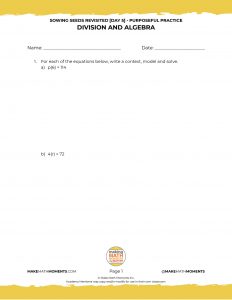

JOIN TO DOWNLOAD