
[accordion openall=”false” clicktoclose=”true” state=”closed” autoclose=”false” openfirst=”true” clicktoclose=”true”]
[accordion-item title=”What do you notice? What do you wonder?”]

[/accordion-item]
[accordion-item title=”Spark Image”]


[/accordion-item]

[accordion-item title=”Make an Estimate”]

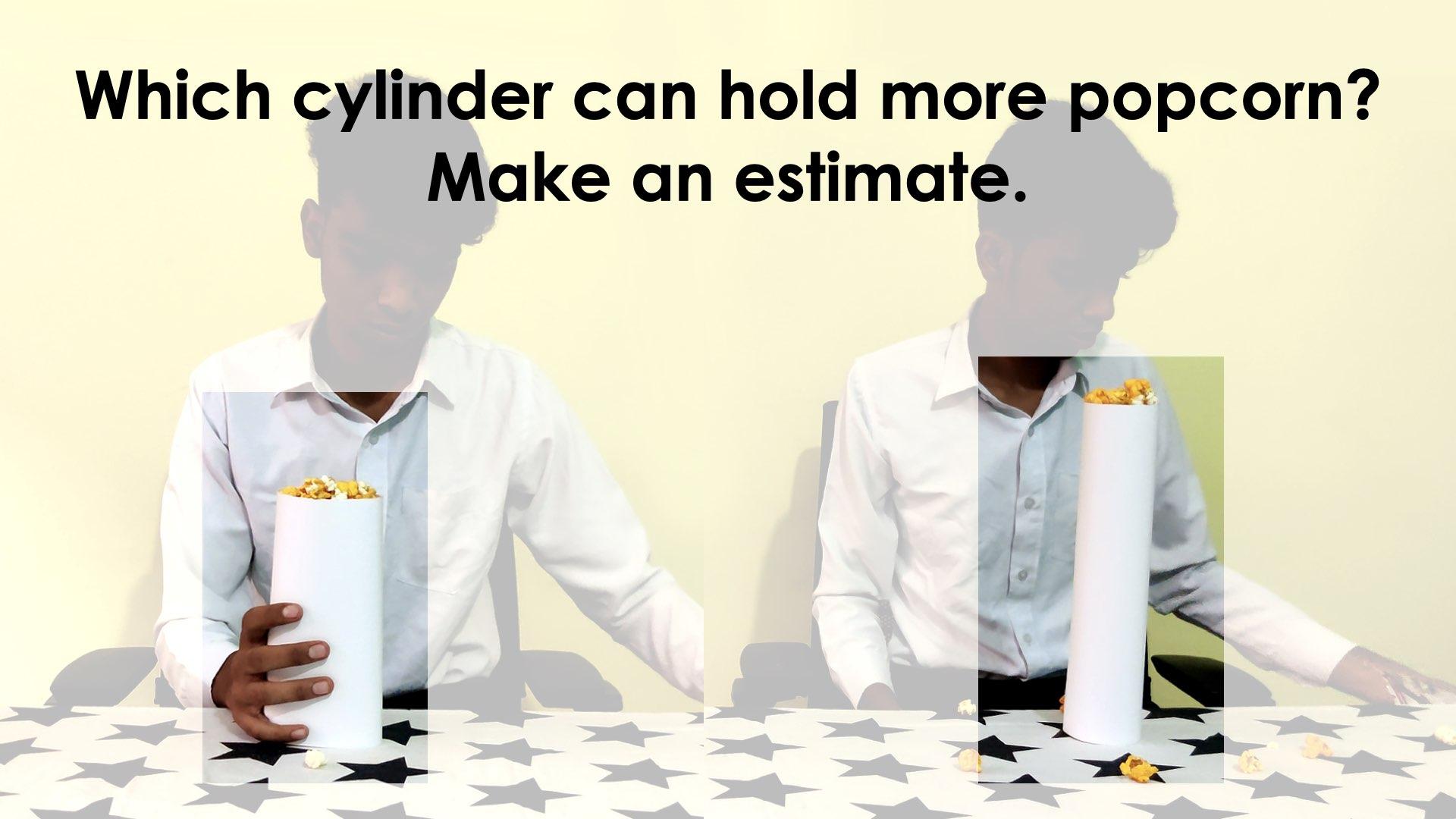
Which cylinder can hold more popcorn?
Make an estimate.

[/accordion-item]
[/accordion]

[accordion openall=”false” clicktoclose=”true” state=”closed” autoclose=”false” openfirst=”true” clicktoclose=”true”]
[accordion-item title=”Struggle Prompt”]

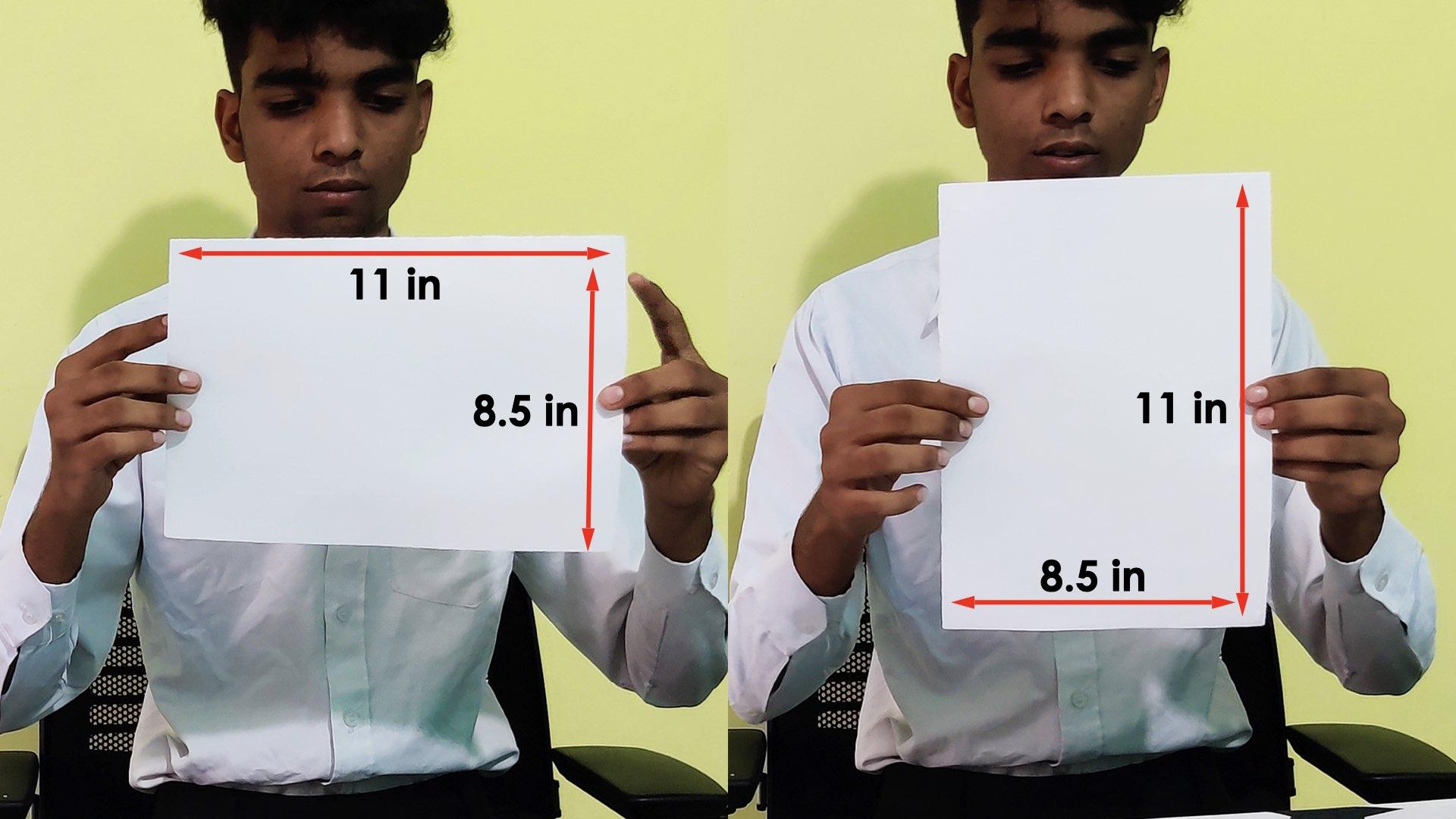
Use two pieces of 8.5” by 11” paper to create the two cylinders we saw in the video; one created by holding the paper lengthwise and the second by holding the paper widthwise.
Update your estimate.

[/accordion-item]
[/accordion]

[accordion openall=”false” clicktoclose=”true” state=”closed” autoclose=”false” openfirst=”true” clicktoclose=”true”]
[accordion-item title=”Reveal Video”]

[/accordion-item]

[accordion-item title=”Reveal Image”]

[/accordion-item]
[/accordion]

[accordion openall=”false” clicktoclose=”true” state=”closed” autoclose=”false” openfirst=”true” clicktoclose=”true”]

[accordion-item title=”Consolidation Prompt #1″]

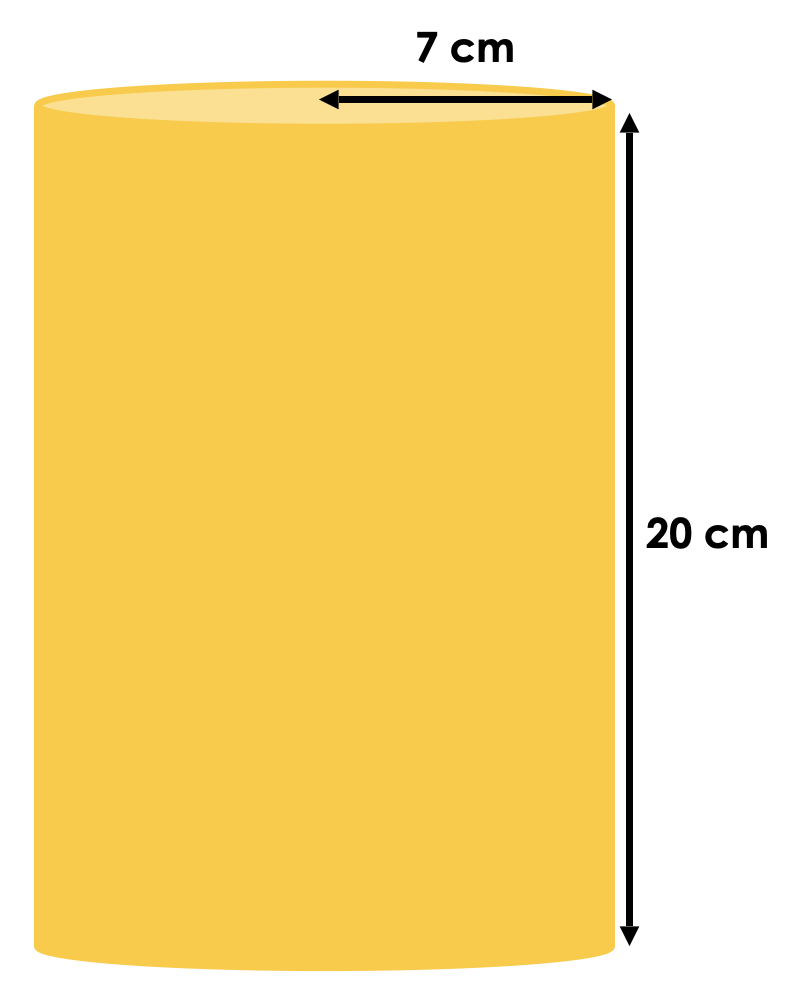
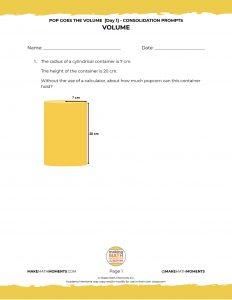
The radius of a cylindrical container is 7 cm.
The height of the container is 20 cm.
Without the use of a calculator, about how much popcorn can this container hold?

[/accordion-item]

[accordion-item title=”Consolidation Prompt #2″]

What might a general rule be for how you could tell whether two different cylinders with the same lateral area (area of the “curved side”) will have the greater volume? Convince your peers.

[/accordion-item]

[/accordion]

Download Editable/Printable Handout

Become a member to access purposeful practice to display via your projector/TV, download the PDF to upload to your LMS and/or print for students to have a physical copy

Download all files of Day 1