
From Models to Algebra: Making Math Visual – Beth Curran
Discover how model drawing evolves from a foundational problem-solving tool into a bridge to algebra. In this interactive session, participants will use familiar classroom manipulatives to make problem solving visual, hands-on, and engaging. Leave with practical strategies for incorporating model drawing into your own lessons to help students confidently connect concrete thinking to abstract algebra.
Beth Curran
Singapore Math Specialist, Thinking Through Math
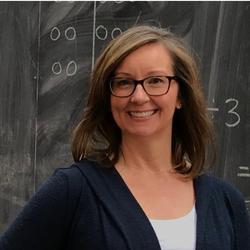
Beth is a Singapore Math Specialist who brings with her more than a decade of experience supporting teachers, administrators, and coaches in their efforts to make math truly make sense for students.
Her own math journey has been transformative—shifting from being a student who memorized procedures simply to earn good grades, to becoming a passionate advocate for teaching mathematics in a way that is visual, meaningful, and deeply understandable.
Beth’s vision is to reimagine mathematics learning environments so that students don’t just get through math, but grow into adults who genuinely believe they are good at it.
1. Mathigon
Type: Interactive online math platform
Context: Shared in response to a question about online manipulatives
Summary:
Mathigon offers interactive, visual math tools and lessons (e.g., Polypad, activities for modeling, geometry, algebra, and number sense). It is commonly used to support conceptual understanding through dynamic visuals and student exploration.
2. Brainingcamp
Type: Online virtual manipulatives platform
Context: Suggested as a favorite resource for manipulatives
Summary:
Brainingcamp provides a large collection of virtual manipulatives (base ten blocks, fraction bars, algebra tiles, number lines, etc.). It is frequently used for modeling, intervention, and visual math instruction across elementary and middle grades.
3. Polypad
Type: Virtual manipulative tool (part of Mathigon)
Context: Shared as an option for online manipulatives
Summary:
Polypad is a free, flexible virtual workspace that allows students to build models using tiles, bars, fractions, algebra tiles, and geometry tools. It is especially effective for bar models, algebraic reasoning, and visual problem-solving.
4. Google Thinking Blocks (Math Playground)
Type: Visual word-problem modeling tool
Context: Recommended for introducing bar models
Summary:
Thinking Blocks helps students solve word problems using visual bar models and unit diagrams. It scaffolds problem-solving by guiding students through representation before calculation. Often used in elementary and middle school.
5. https://bethmathtrainer.com/
Type: Professional development/math instruction website
Context: Shared directly as a link by Michelle Clark
Summary:
Beth Math Trainer is the website of the presenter (Beth Curran). It likely includes professional development offerings, instructional resources, and training focused on visual models, bar modeling, and conceptual math instruction.
6. www.ThinkingThroughMath.org
Type: Math professional development / instructional resource site
Context: Shared near the end of the chat
Summary:
Thinking Through Math is a professional learning resource focused on helping educators deepen conceptual understanding and improve math instruction. It often emphasizes reasoning, modeling, and student thinking rather than procedural memorization.
-
From Models to Algebra: Making Math Visual – Discussion
What was your big take away from this particular lesson?
What is something you are still wondering?
Share your thinking below.
Sorry, there were no replies found.
Log in to reply.
1. Mathigon
Type: Interactive online math platform
Context: Shared in response to a question about online manipulatives
Summary:
Mathigon offers interactive, visual math tools and lessons (e.g., Polypad, activities for modeling, geometry, algebra, and number sense). It is commonly used to support conceptual understanding through dynamic visuals and student exploration.
2. Brainingcamp
Type: Online virtual manipulatives platform
Context: Suggested as a favorite resource for manipulatives
Summary:
Brainingcamp provides a large collection of virtual manipulatives (base ten blocks, fraction bars, algebra tiles, number lines, etc.). It is frequently used for modeling, intervention, and visual math instruction across elementary and middle grades.
3. Polypad
Type: Virtual manipulative tool (part of Mathigon)
Context: Shared as an option for online manipulatives
Summary:
Polypad is a free, flexible virtual workspace that allows students to build models using tiles, bars, fractions, algebra tiles, and geometry tools. It is especially effective for bar models, algebraic reasoning, and visual problem-solving.
4. Google Thinking Blocks (Math Playground)
Type: Visual word-problem modeling tool
Context: Recommended for introducing bar models
Summary:
Thinking Blocks helps students solve word problems using visual bar models and unit diagrams. It scaffolds problem-solving by guiding students through representation before calculation. Often used in elementary and middle school.
5. https://bethmathtrainer.com/
Type: Professional development / math instruction website
Context: Shared directly as a link by Michelle Clark
Summary:
Beth Math Trainer is the website of the presenter (Beth Curran). It likely includes professional development offerings, instructional resources, and training focused on visual models, bar modeling, and conceptual math instruction.
6. www.ThinkingThroughMath.org
Type: Math professional development / instructional resource site
Context: Shared near the end of the chat
Summary:
Thinking Through Math is a professional learning resource focused on helping educators deepen conceptual understanding and improve math instruction. It often emphasizes reasoning, modeling, and student thinking rather than procedural memorization.
Notes on What Was Not Included
-
Mentions like “Singapore Math,” “Exploding Dots,” “Math in Focus” were discussed without links, so they were not counted as shared resources.
-
References to QR codes were mentioned, but no URLs were provided.
-
General strategies (bar models, CRA, tape diagrams) were instructional ideas, not external resources.